
Written by Daria Weir, Class of 2028
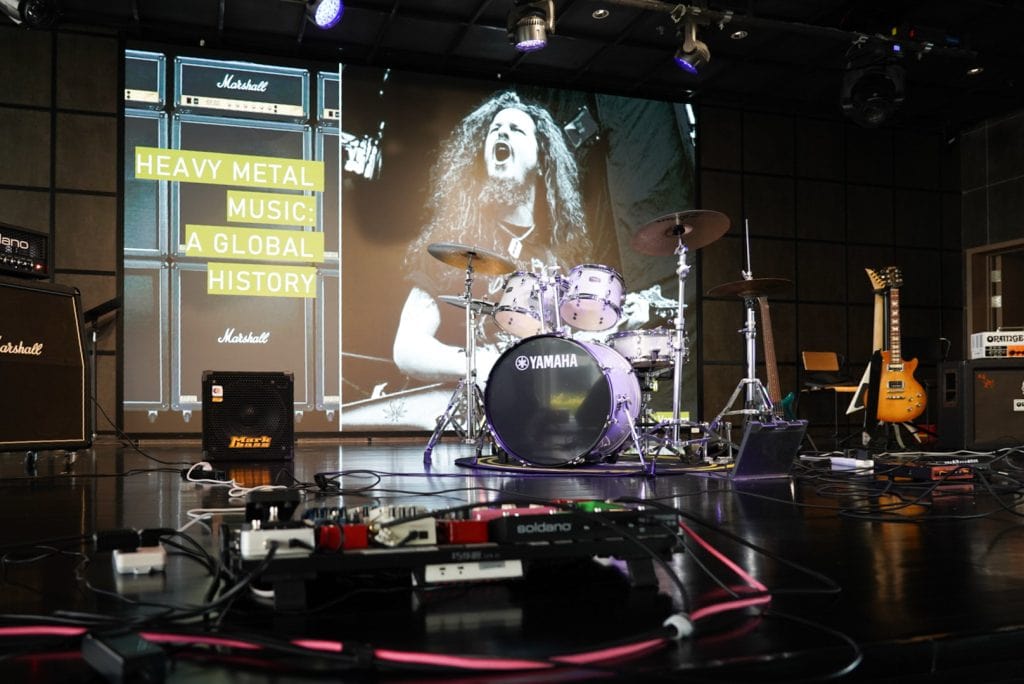
Music often reflects the tone of a generation. It captures the emotions, tensions, and values that people experience in a particular time and place. Over the course of this class, I began to see music less as simple entertainment and more as something deeply connected to culture and identity. For a university like Duke Kunshan University, which emphasizes a global education and cross-cultural understanding, this perspective felt especially meaningful. The course reframed music as part of a larger global conversation and showed how different societies express themselves through sound, genre, and subculture.
One of the most impactful aspects of the course was how it added depth to musical subcultures that might otherwise be misunderstood or overlooked. Before taking the class, I already had a strong interest in metal music, but I mostly appreciated it from a listener’s perspective. Through the lectures and discussions, I began to understand the historical and cultural contexts that define the genre through themes of rebellion, identity, and cultural storytelling. These connections revealed a deeper idea of music as a result of the social environments in which it develops.
Another highlight of the course was the focus on the compositional components of metal music. The lectures explaining how different musical elements work together were especially engaging. Even as someone with no formal training in music, the explanations were clear and approachable. Breaking down songs into elements like structure, chord progressions, and instrumentation helped me see how carefully constructed these pieces actually are, instilling a deeper appreciation for the creativity involved in songwriting, especially within a genre that is often stereotyped as chaotic or purely aggressive. The course not only made me aware of these compositional techniques, but also gave me the language to explain how and why they are used to create a particular effect on the audience. This approach reframed the genre as something far more complex and intentional.

The global perspective of the course also stood out to me. At DKU, students come from many different cultural backgrounds, and that diversity was reflected in the topics we explored. Looking at how different cultures interpret similar musical themes made it clear that music can be both universal and deeply connected to local contexts. One of the most meaningful parts of the class was the opportunity to share something from my own cultural perspective during the final presentation. Being able to bring a piece of music or culture that I personally connect with into the classroom made the learning experience feel complete. It allowed me to apply the ideas we had studied throughout the semester to something that mattered to me.
What began in this course as an academic appreciation for the genre became entwined with my connection to the music and artists, turning it into something much more personal and meaningful. Overall, this course clearly felt like a passion project shared by both teachers and students.