
Written by Renhao Guo, Class of 2029 (candidate for Philosophy, Politics, and Economics major)
作者:郭人豪,2029届学生
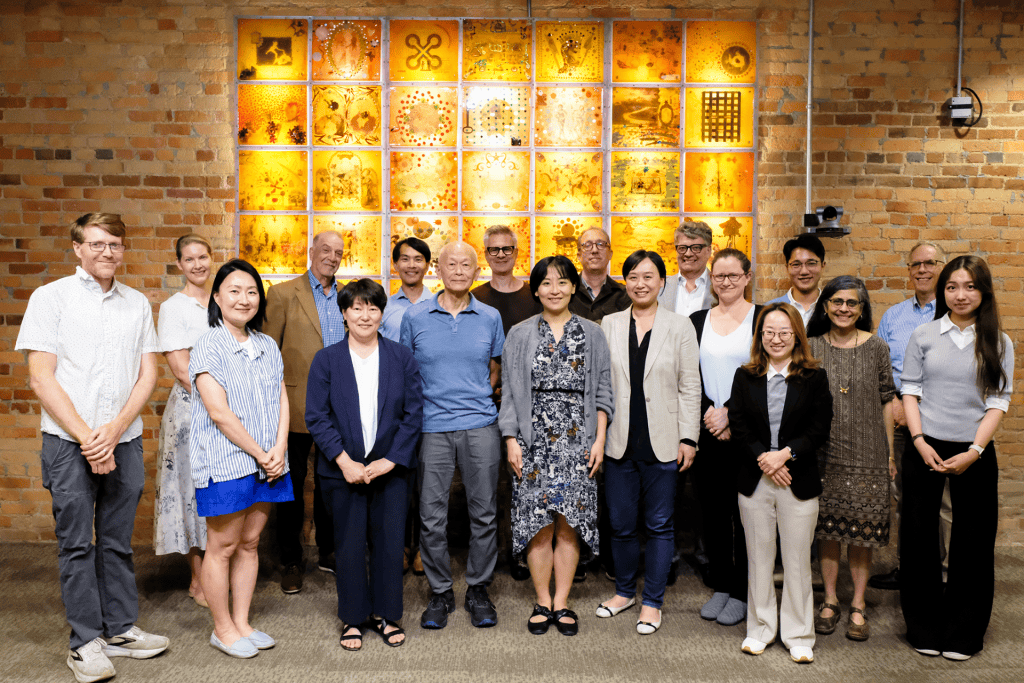
I arrived in the United States on April 14, 2026, embarking on an academic journey that I had never envisioned before. From the Duke campus to the two-day workshop on “Varieties of Harmony in Greek and Chinese Philosophy”, as a freshman, what I once regarded as distant and vast is now within reach.
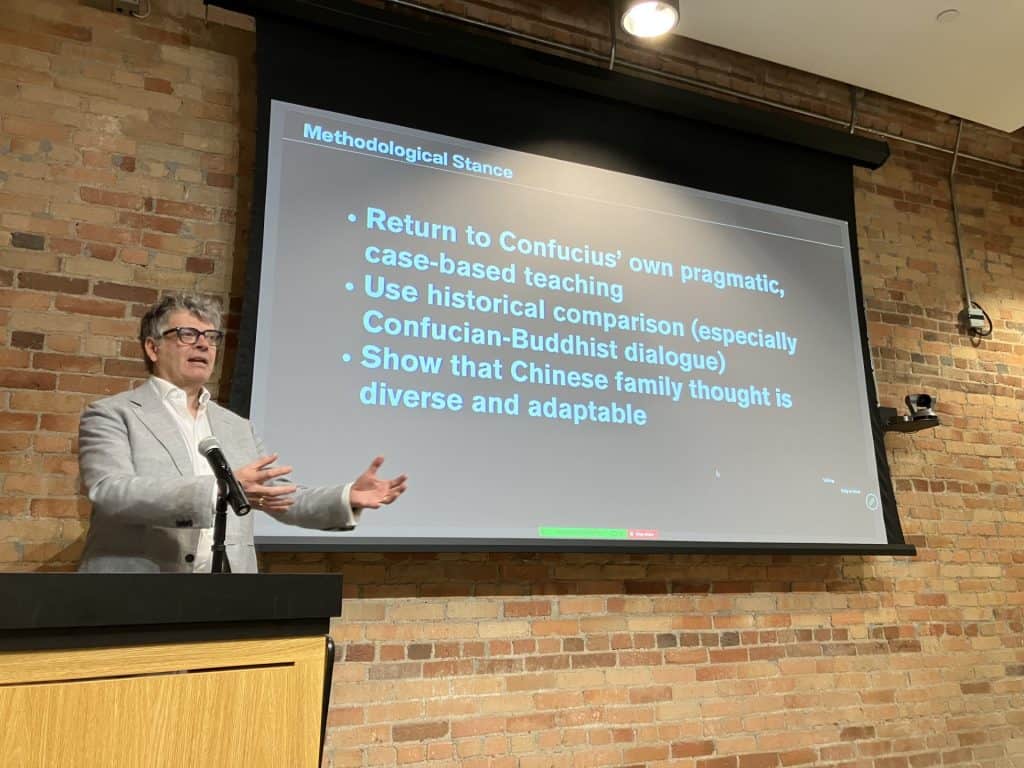
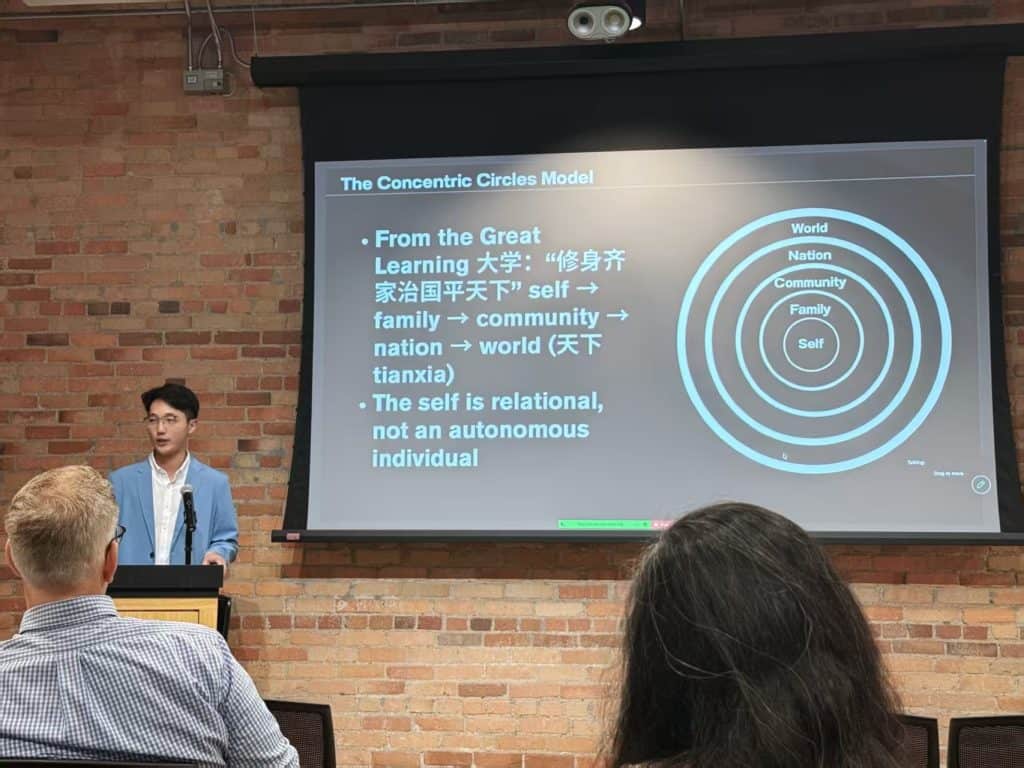
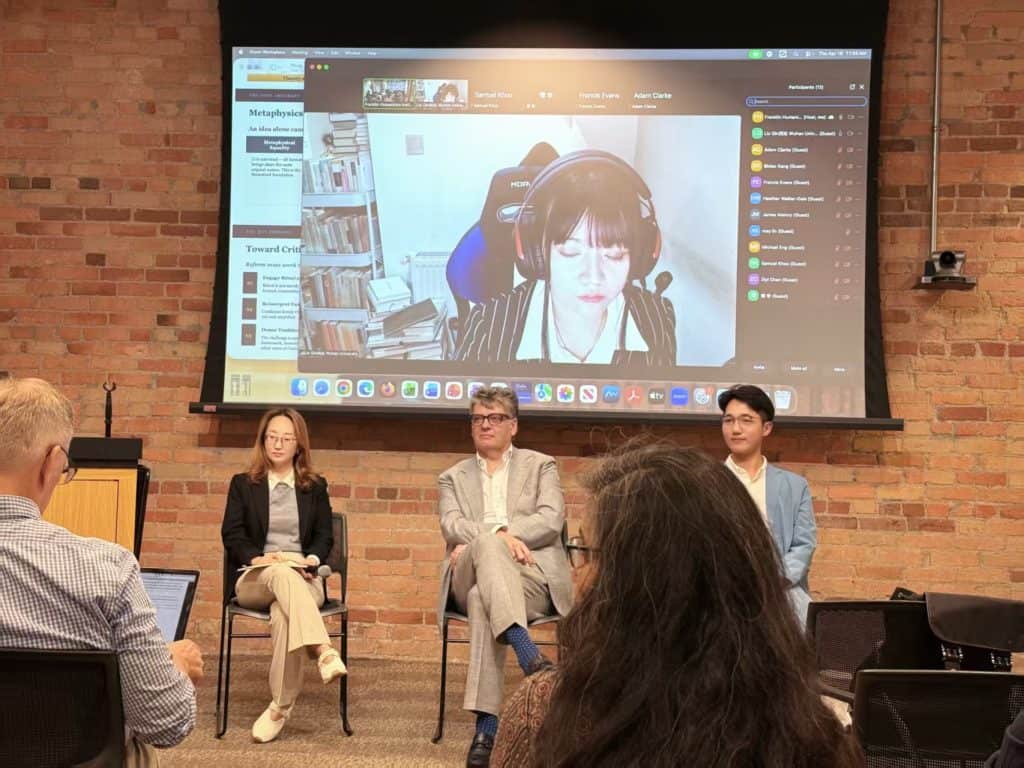
During my high school years, I began to read a large number of humanities books. Chinese and ancient Greek philosophy occupied a significant portion in my knowledge system. As an “amateur” in philosophy, my previous focus was on extracting specific wisdom from philosophy for specific issues, and I could vaguely sense the similarities and differences among various philosophical thought systems. But this workshop enabled me to appreciate the truly systematic and comparative study of philosophy. During the conversation with Professor Miller苗建时, I learned that the better idea for this conference was to have experts in Chinese philosophy and Greek philosophy listen to and respond to each other, thereby conducting a continuous and reciprocal study of “harmony”. Fortunately, with the support and assistance of Professor Miller苗建时, I was also involved in the entire process from research to presentation and discussion. There is no doubt that my professional level is far from the ideal one. All I can do is to conduct limited research and make contributions based on my cultural background and my enthusiasm for humanities. Therefore, I don’t so much view this as a display, but rather consider this academic journey as an opportunity for growth. At the meeting, the scholars discussed various topics such as the situation of family and sexuality, what constitutes justice, the similarities and differences between ancient Chinese and Greek thought, the principle of righteousness, the harmony of music and rhythm, education, friendship, etc. These knowledge points may not be fully remembered, but the academic rigor, the concern for humanities, and the open and inclusive academic dialogue environment all left an indelible mark in my heart.
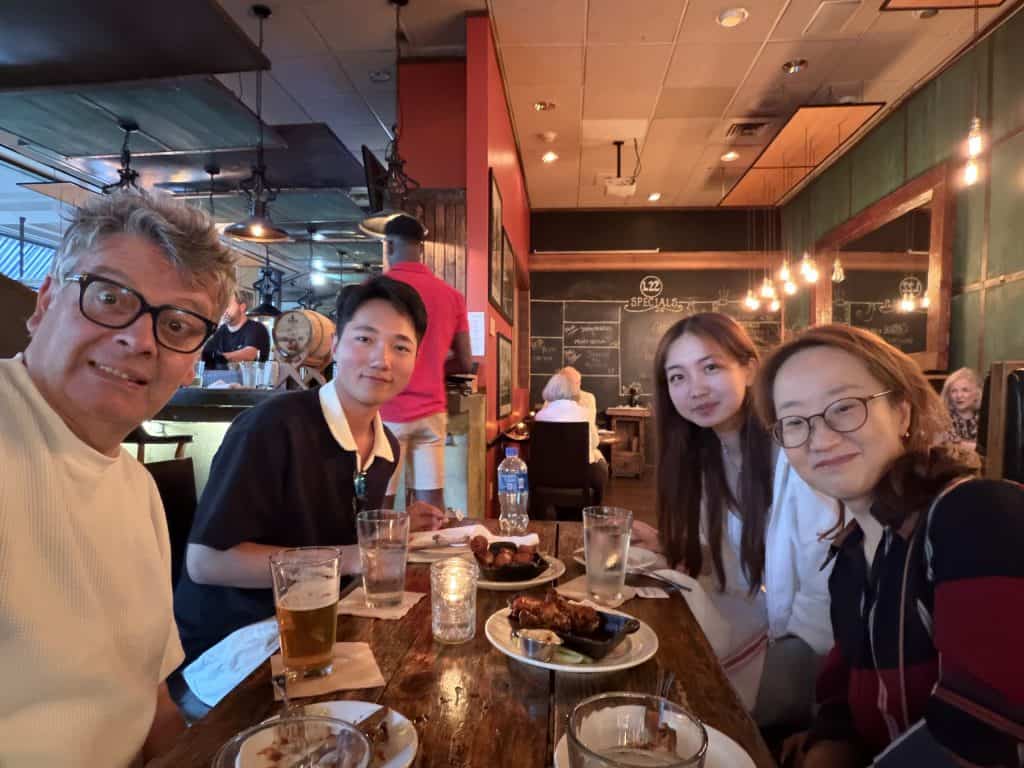
Apart from the regular meetings, what I enjoy more are the midday meals and the conversations that take place during leisure time. For instance, during dinner time, I spent almost the entire meal discussing relativism and feminism, as well as their relationship with modernity, with Professor Wang and Professor Miller苗建时. During lunchtime, I discussed German philosophy and Marxism with Duke’s philosophy professor. And while in the car, I had casual conversations with the professors about Duke’s history. These dialogues were not necessarily closely related to rigorous academic research, but they were particularly valuable. As a freshman, it is natural for me to feel a sense of distance from the professors. Even though I had many questions, I still longed for in-depth conversations. Such opportunities were extremely rare. Therefore, these long, deep, and equal conversations made me no longer feel that age and identity were prerequisites for intellectual conversations. I was also fortunate to be able to meet these brilliant scholars.
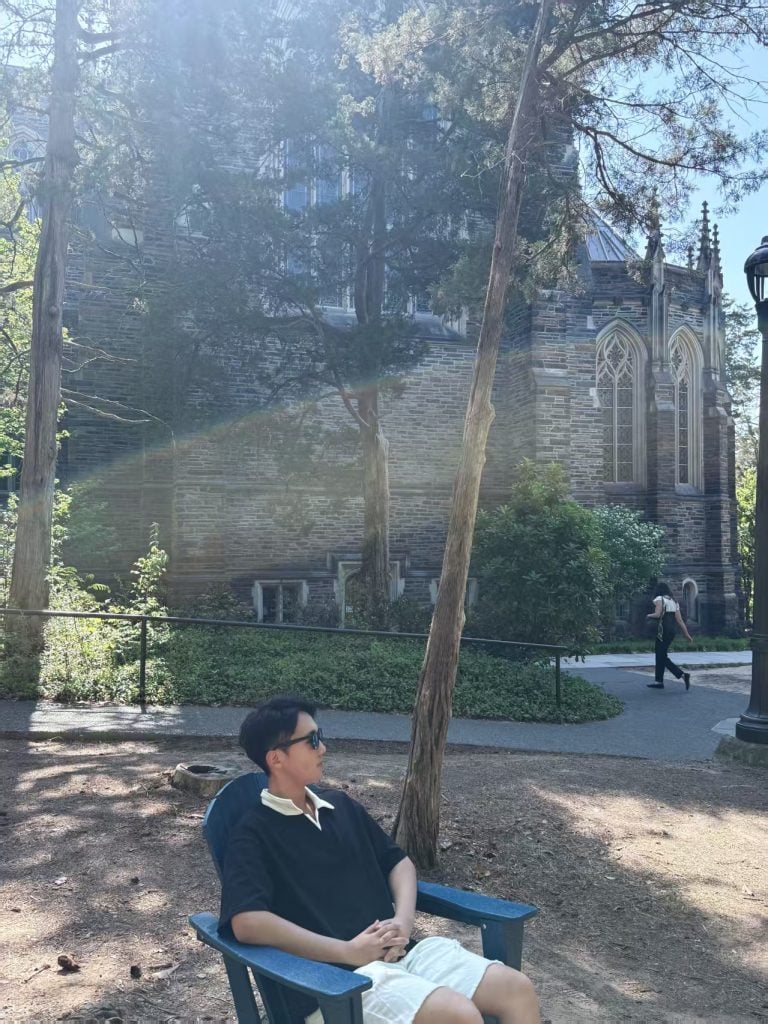
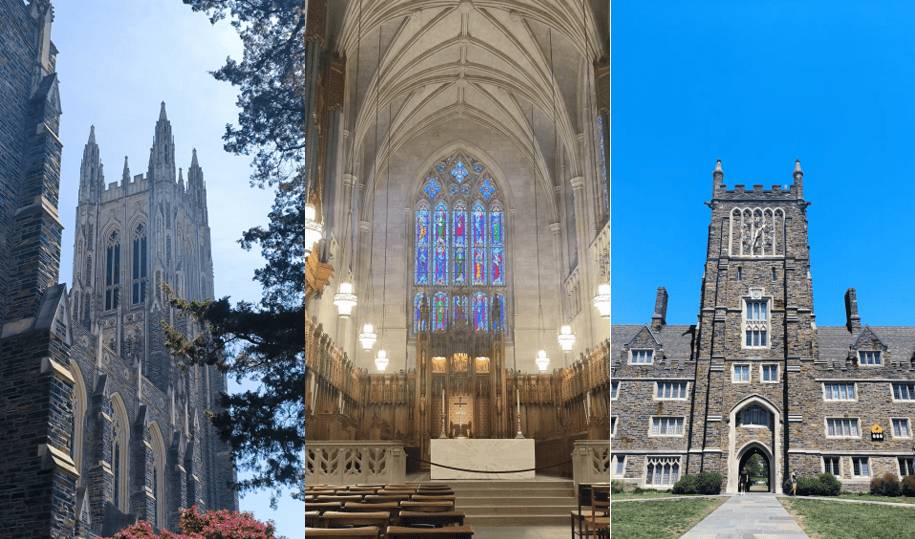
Additionally, I spent nearly a whole day visiting the Duke campus and experiencing the local culture. Most DKU students usually go on an exchange program at Duke during their junior year. And I was completely blown away by Duke before even enrolling. I believe that architectural style is a very important factor for a university. The older the university is, the more so this is the case. The most powerful impression came when I entered Duke Church. Beneath the Gothic architecture lies an overwhelming grandeur. We sat there for a long time, looking at the statues and the Bible in front of us, thinking about how people prayed here a hundred years ago. I sincerely felt extremely fortunate to be able to study here.
Although the long round-trip flight was very tiring, this trip was extremely worthwhile for me. Thank Professor Miller苗建时 and Professor Wang for offering me this opportunity. The two days of study there were very much in line with the dialogues I had imagined taking place in the Athenian city-state when I read Plato before. What was gained there was not only knowledge, but also a broader academic perspective, meaningful and equal conversations, as well as good teachers and friends. Finally, I hope such exchanges will occur more frequently around the world. I will also internalize and pass on the gains from this experience.
Chinese Version 中文版本:
我于2026年4月14日抵达美国 ,开启了一段前所未有的学术之旅。从杜克大学校园到为期两天的“希腊与中国哲学中的和谐多样性”研讨会,作为大一新生,那些曾经看似遥远而深不可及的知识,如今已触手可及。
高中时期,我开始广泛阅读大量人文类书籍。中国哲学与古希腊哲学在我的知识体系中占据了重要地位。作为哲学领域的“业余爱好者”,我此前主要关注从哲学中提取针对具体问题的具体智慧,并能大致感知不同哲学思想体系之间的异同。但这次研讨会让我得以深入理解哲学真正系统化、比较性的研究方法。在与苗建时教授的交流中,我认识到本次会议的最佳方案是邀请中国哲学与希腊哲学领域的专家相互聆听并交流观点,从而持续开展关于“和谐”的双向研究。幸运的是,在苗建时教授的支持下,我全程参与了从研究到报告展示再到讨论的全过程。毫无疑问,我的专业水平远未达到理想状态;我所能做的仅是基于自身文化背景和对人文科学的热情,开展有限的研究并做出贡献。因此,我并不将此视为一场展示,而是将这段学术旅程视为一次成长的机会。在会议上,学者们探讨了家庭与性关系的现状、何为正义、中国古代与希腊思想的异同、正义原则、音乐与节奏的和谐、教育及友谊等诸多议题。这些知识点或许不会被完全牢记,但严谨的学术态度、对人文学科的重视,以及开放包容的学术对话氛围,都给我留下了深刻的印象。
除了定期会议之外,我更享受午间用餐时光以及闲暇时的交流。例如,在晚餐时,我几乎全程与王教授和苗建时教授探讨了相对主义与女性主义,以及它们与现代性的关系;午餐时则与杜克大学哲学教授讨论了德国哲学和马克思主义;乘车途中,我还与教授们就杜克大学的历史进行了轻松交谈。这些对话虽未必与严谨的学术研究直接相关,却极具价值。作为大一新生,我自然会与教授们保持一定距离。尽管心中有许多疑问,但我仍渴望进行深入交流——这样的机会极为罕见。正因如此,这些漫长、深入且平等的对话让我不再觉得年龄和身份是参与学术对话的必要条件。我也很幸运能结识这些杰出的学者。
此外,我几乎花了一整天时间参观杜克大学校园,体验当地文化。大多数 DKU 学生通常会在大三时参加杜克大学的交换项目。甚至在正式入学之前,我就对杜克大学留下了深刻印象。我认为建筑风格对一所大学而言至关重要——一所大学的历史越悠久,这一点就越明显。最震撼我的时刻是当我走进杜克教堂时:哥特式建筑之下展现出令人叹为观止的宏伟气势。我们坐在那里良久,凝视着眼前的雕像和圣经,想象着一百年前人们曾在此祈祷的情景。我由衷感到自己能在这里求学实在幸运。
尽管这段往返漫长的飞行令人疲惫,但对我而言绝对物超所值。衷心感谢苗建时教授和王教授给予我这次机会。在那里度过的两天学习时光,与我之前阅读柏拉图著作时所想象的雅典城邦对话场景十分吻合。我不仅获得了知识,更拓宽了学术视野,参与了富有意义且平等的交流,并结识了优秀的导师和朋友。最后,我希望此类交流能在全球范围内更加频繁地开展。我也会将此次经历所获得的收获内化并传承下去。